5 Surprising Truths About the 2025 Housing Market (It's Not What You Think)
The Gap Between Headlines and Reality
National headlines about the housing market are a mix of confusing, contradictory, and often alarming news. It's easy to get lost in the noise. This leaves many people asking a simple, direct question: "Did homes get any more affordable in 2025?" While national trends suggest one story, the reality on the ground in a market like Rapid City, South Dakota, tells a much different—and more interesting—one.
This article cuts through the noise to reveal the five most surprising truths from the 2025 Rapid City real estate market report. What’s happening here is not what you think.
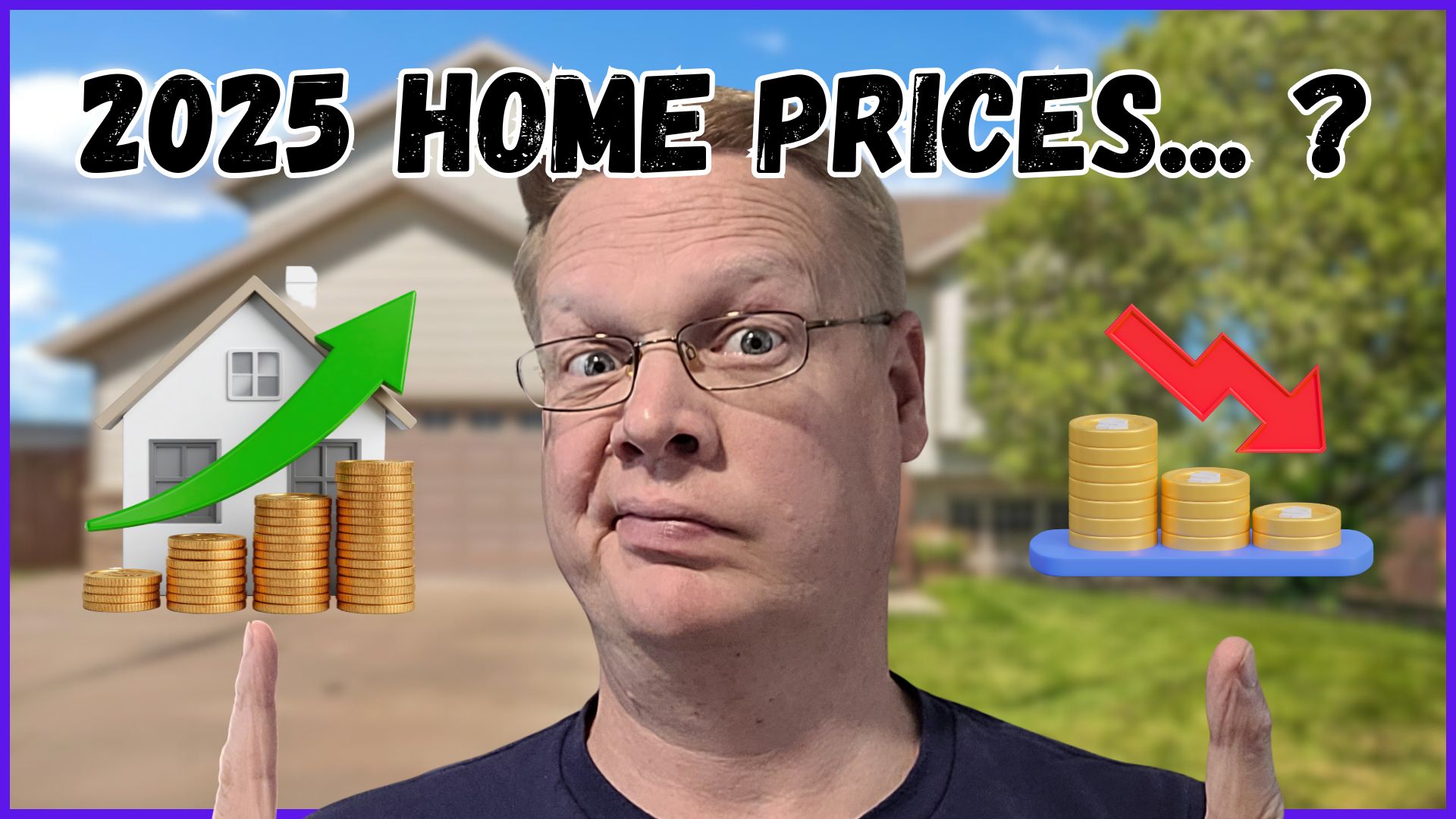
Watch the 12 minute video: https://youtu.be/azrC_SB0R20
1. National "Fixes" Won't Fix Our Local Market
Major national housing policy proposals have dominated the news, but their real-world impact on Rapid City is minimal. While ideas like banning large institutional investors from buying single-family homes sound significant, they are largely irrelevant here. Rapid City lacks the population and housing density to attract these massive investors in the first place, and nationally, they only account for about 2% of home purchases. Furthermore, what's to stop a large investor from just creating a small LLC with only three or five homes to bypass such a rule?
Other proposals, such as a $200 billion bond purchase to lower interest rates, 50-year mortgages, or portable mortgages, may offer short-term relief or help specific individuals. However, they are not long-term solutions for the core challenge of housing affordability.
Even a "national housing emergency" aimed at cutting building regulations to lower material costs wouldn't solve Rapid City's primary constraint. Our market is defined by a limited number of local builders. The region's remoteness and challenging supply lines deter large national builders like D.R. Horton from entering the market. The fundamental issue remains a lack of supply that these national policies simply don't address at the local level.
.jpg)
2. The Market Didn't Crash—It Just Returned to Normal
Contrary to fears of a price collapse following the pandemic boom, the data shows remarkable stability. In 2025, average home prices in the Rapid City area still increased by 1.2%.
To understand why this is a sign of strength, we need context. This modest growth follows an "unnatural" spike where prices surged by 29% between 2020 and 2022. The recent single-digit increase isn't a downturn; it's a return to the steady, predictable, and healthy growth trend the market experienced from 2012 to 2019. This demonstrates market stability, not weakness.
So, why didn't our market crash? Because it’s fueled by powerful and sustained local growth. With the new mission coming to Ellsworth Air Force Base, the expansion of Monument Health, and our status as the primary trade and healthcare hub for a 200-mile radius, Rapid City’s economic foundation is solid and growing, insulating it from national volatility.
"if you're waiting for the market to fall out in Rapid City
before you buy a home, you might be waiting for quite a while"
before you buy a home, you might be waiting for quite a while"
3. It's Still a Seller's Market, But Buyers Aren't Powerless
The data clearly shows that Rapid City remains a seller's market, with just 3.2 months of available inventory. However, the power dynamic is more nuanced than that single number suggests.
A key statistic reveals that sellers aren't getting everything they want: on average, homes are selling for 98% of their list price. In practical terms, this means sellers are negotiating. Buyers aren't getting massive discounts like "$50,000 off the list price," but they are successfully pushing back from the initial asking price.
This shift is driven by buyers who have become "considerably more picky," which is why homes are sitting on the market longer now than they did during the 2021-2022 frenzy. The lesson for buyers is clear: while sellers still hold an edge on price, you have gained significant power through patience and scrutiny.
.jpg)
4. For Sellers, the Biggest ROI Is in the Smallest Details
In this market, understanding the psychology of "move-in ready" is paramount. Huge, expensive renovations are not necessary to secure a good sale; in fact, the data and on-the-ground experience show that simple, well-executed cosmetic updates yield the best returns. This is because buyers will subtract the perceived cost of repairs from their offer, no matter how the home is priced.
Experience on the ground proves the transformative power of paint. Consider a recent sale of a rental property. Before painting, the feedback was brutal: "This place needs a lot of work. It's a piece of crap." After a professional paint job and nothing else, those comments vanished and the home sold. This simple update, which must include the ceilings for maximum effect, changed the entire perception of the property. A critical warning, however: do the job correctly. A sloppy "landlord special"—painting over outlets and covers, getting paint all over the trim—signals neglect and can cost you more than it saves.
Similarly, refinishing hardwood floors offers a massive return. At a cost of around $4 per square foot—meaning a 1,000-square-foot space is a $4,000 investment—statistics show that refinishing hardwood has over a 100% ROI. The psychology is simple: when a buyer sees worn-out floors, they don't just subtract the repair cost. They "automatically start subtracting $5,000 or $10,000 off the purchase price" because they overestimate the hassle and expense. A gleaming floor removes that objection entirely.
--------------------------------------------------------------------------------
Look Local and Think Long-Term
The Rapid City real estate market is more insulated and stable than national headlines suggest. Its health is driven by powerful local growth factors, including the mission at Ellsworth Air Force Base and the city's role as a regional trade and healthcare hub.
For potential buyers and sellers, the core takeaway is that understanding these local dynamics is far more important than reacting to the national news cycle. The market here follows its own steady, upward trajectory.
This leads to a final, crucial question: knowing that local prices are on a slow and steady climb, what does waiting for the "perfect" time to buy truly cost you in the long run?